
Watch on YouTube (opens on YouTube in a new tab)
The Foreknowledge of Ragnarök
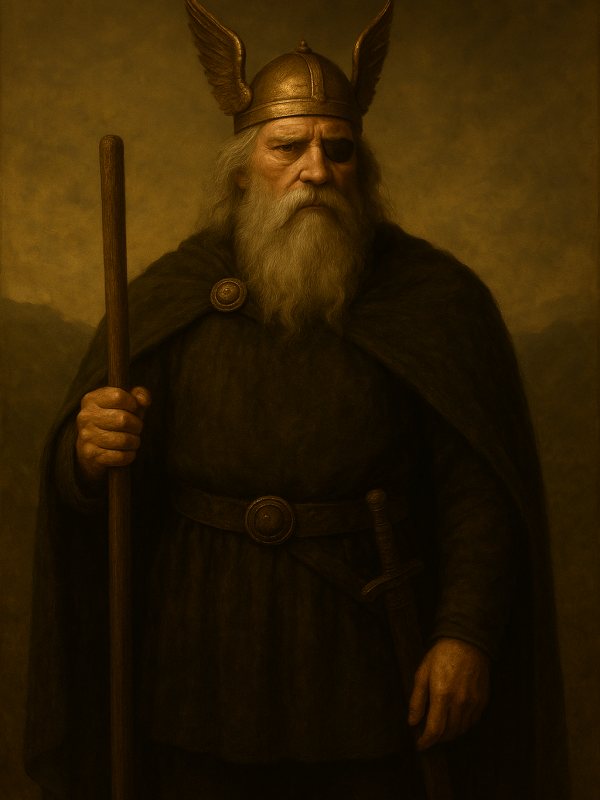
What makes this telling of Ragnarök distinct is its emphasis on foreknowledge: the Norse gods did not face their end blind. The Poetic Edda‘s Völuspá holds that the order of events was already fixed and, to some degree, already known — Fenrir breaking free, Jörmungandr rising from the sea, Loki steering a ship of the dead against the gods, Odin falling to Fenrir, Víðarr avenging him, and Thor and the serpent killing each other in turn.
Völuspá names each figure’s fate individually and in sequence, and does not treat it as a surprise to the gods themselves — the horror of Ragnarök, in this telling, is precisely that its details were already written. The sun goes black, the earth sinks into the sea, and fire consumes what’s left.
And yet the myth does not end in pure destruction. Völuspá itself describes a new earth rising green from the waves afterward. The Poetic Edda‘s Vafþrúðnismál adds detail beyond what this site’s video narrates: the humans Líf and Lífthrasir survive by hiding in a wood, the sun’s daughter continues her mother’s course across the sky, and among the gods, Víðarr, Váli, and Thor’s sons Móði and Magni live on into the new world. Ragnarök was never simply an ending — the sources describe it as part of a cycle.
Sources & Further Reading
- Poetic Edda, "Völuspá," st. 50–59 (trans. Henry Adams Bellows, 1936) — the events of Ragnarök and the new earth rising afterward
- Poetic Edda, "Vafþrúðnismál," st. 44–51 (trans. Henry Adams Bellows, 1936) — survivors of Ragnarök: Líf and Lífthrasir, the sun's daughter, Víðarr, Váli, Móði, and Magni
- Prose Edda, "Gylfaginning," ch. LI (trans. Arthur Gilchrist Brodeur, 1916) — the same sequence retold in continuous prose, quoting Völuspá directly